AICA project leader

Mariya Dzhimova (HMTM/HM)
Mariya Dzhimova is a sociologist whose research and interests focus on digital innovations in the arts and cultural sectors. As a research associate at the Institute for Cultural Management and Media at the University of Music and Performing Arts Munich as well as (HM) Munich University of Applied Sciences, she investigates the application of artificial intelligence both in artistic practice and within the operational processes of cultural institutions. She has collaborated on various projects at the intersection of science, art, and technology. Since the end of 2022, Mariya Dzhimova has been heading the Digitalisierungskolleg AICA (Digitalization College AICA).
Scientific instructors
Scientific instructors prepared the technical content hosted on this website. They can guide you through the tutorials and your final project implementation.

Dr. Téo Sanchez (HM - MUC.DAI)
Dr. Téo Sanchez is a postdoctoral researcher and computer scientist focusing on human-AI interaction and the artistic communities of practice that form around AI technologies. His research ranges from the early AI artists who engaged with deep learning in the late 2010s to today’s recreational online communities centered on text-to-image generation. Trained at IRCAM Paris, he was a Marie Skłodowska-Curie Fellow at the “Munich Interactive Intelligence Initiative” at LMU Munich under Prof. Ophelia Deroy, as well as a member of the research initiative “Regaining Power over AI,” in collaboration with Kate Crawford, Gonzalo Ramos (Microsoft Research), and Baptiste Caramiaux (CNRS).
Lecturers and consultants
External artists and experts will give lectures and be available on-site to advice you on your project.
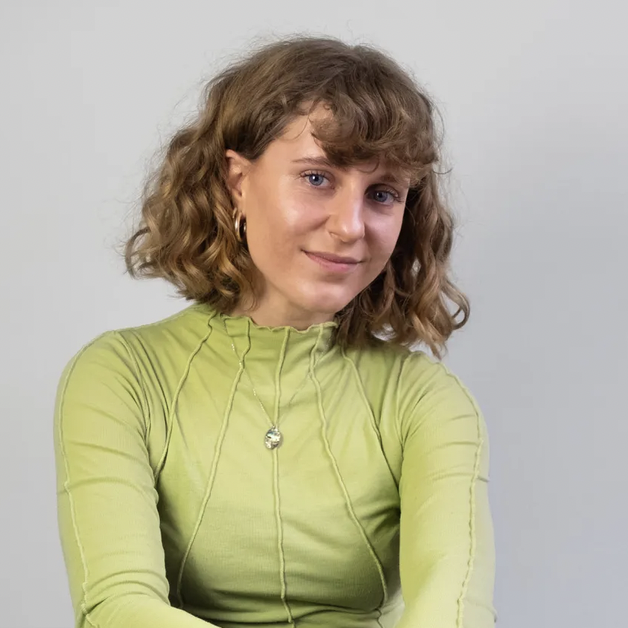
Daniela Vogel
Daniela Vogel is a designer at Stan Hema, combining brand design, motion design, and digital media with a curiosity for AI and generative design. She develops visually expressive design systems and graphic tools for brands. In projects for, among others, the Deutsche Oper Berlin, the Bayerischer Rundfunk, and GLS Bank, she combines design quality with technical exploration.
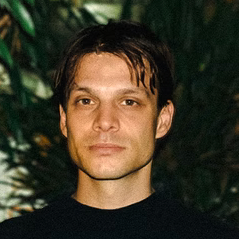
David Goldberg
David Goldberg (Berlin/Munich) is a media artist, musician and filmmaker working at the intersection of moving image, spatial sound and the sociopolitical imaginaries of late capitalism. In each of his works, the position of the viewer is part of the material.
His work has been presented at the Spatial Sound Institute / 4DSOUND Budapest, Berghain Berlin, De School Amsterdam, Lothringer 13 Halle Munich and Nuit Blanche Paris, among others.
As an Art director, DP and motion designer, he has worked for clients including Telekom, Mercedes, Bayerische Staatsoper, Dekmantel Festival and isBurning.
He currently works as a producer on OUR BR00D at Haus der Kunst München and MUC.DAI, a project developed by OMSK Social Club that approaches AI training as a domestic and relational practice, and is developing OpSign, a transdisciplinary media studio and production platform.
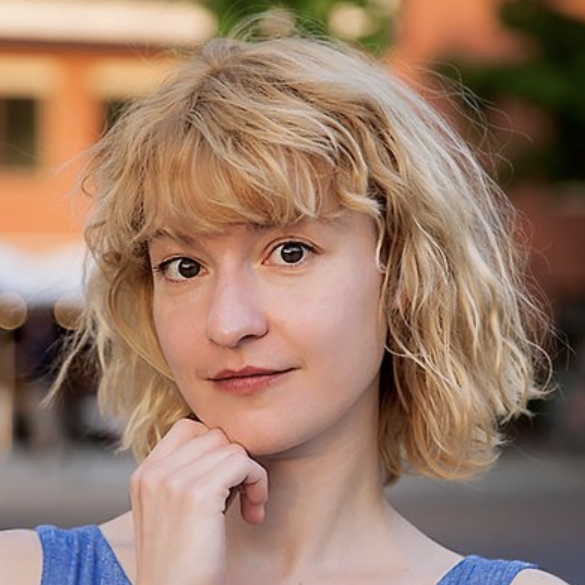
Diana Alina Serbanescu
Diana Alina Serbanescu is a AI researcher, choreographer, and performance artist working at the intersection of embodiment, artificial intelligence, and feminist thought. At ZHdK, she develops her work within Performance AI, a research project led by Chris Salter, focusing on choreographic systems that bring embodied practice, computation, and ethics into shared performative frameworks. Diana’s practice explores choreography as a site for negotiating agency between human and non-human actors. Through performance, sound, and wearable technologies, she creates poetic systems in which bodies and machines listen, co-compose, and share presence. Situated between artistic research and systems design, her work investigates how agency and aliveness emerge across bodies, machines, and environments. She approaches performance as both method and site—a laboratory for rehearsing and reconfiguring human–machine relations. Her current research includes Song Machines, a practice-based project exploring the voice as an embodied interface for human–machine co-performance, and Embodied Synthesisers (2025-ongoing), which explores choreographic duets in which bodies negotiate balance through tensile, sensor-embedded membranes. Her recent projects include She Brings the Rain (Tanz im August, 2023) and Embodied Voice and AI (2022). She is co-founder and artistic director of REPLICA.
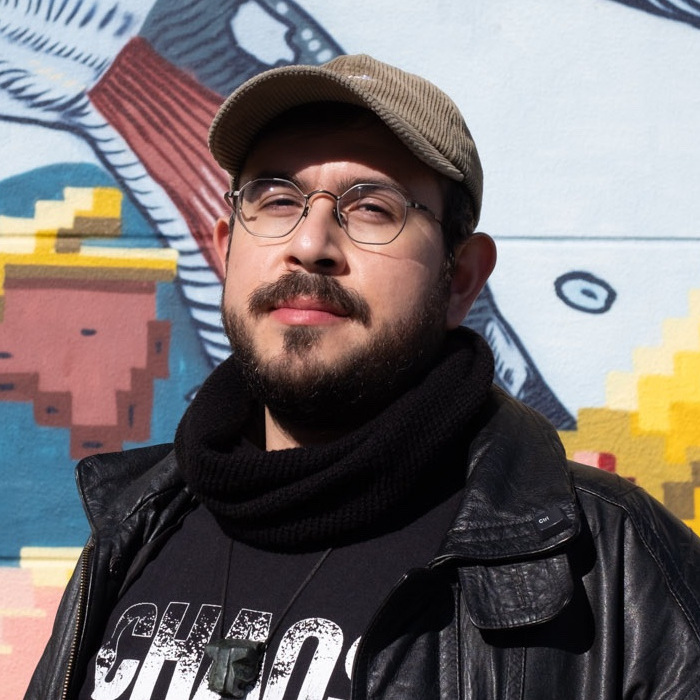
Moisés Horta Valenzuela
Moisés Horta Valenzuela (1988, he/him) is an artist, technologist and musician from México, working in the fields of computer music, Artificial Intelligence and the history and politics of emerging digital technologies. He has received the award of A.I. Newcomer 2023 by the Association of Informatics of Germany. As 𝔥𝔢𝔵𝔬𝔯𝔠𝔦𝔰𝔪𝔬𝔰 , he crafts an uncanny link between ancient and contemporary technologies through a critical lens in the context of contemporary electronic music and the sonic arts. His work has been presented in Ars Electronica, NeurIPS Machine Learning for creativity and design workshop, MUTEK México, Transart Festival, MUTEK: AI Art Lab Montréal, Elektron Musik Studion, CTM Festival Berlin, KTH: Royal Institute of Technology Stockholm, Intelligent Instruments Lab, Reykjavik, among others. He is currently working as an AI music technologist, developing new instruments utilizing Generative neural networks, independently organized workshops around creative AI art practices centered around sound and image synthesis and the demystification of neural networks. He is also developing SEMILLA.AI, an interface for interacting with generative neural sound synthesizers.